What are the advantages and disadvantages of living in the city
What are the advantages and disadvantages of living in the city
Advantages and Disadvantages of Urban Living

At haart, we have the technology and the people to help you move to the perfect place for you. We cover over 4,000 postcodes across England and Wales, but our teams also have unparalleled local knowledge of their area, so you can trust us to help you move. Find your nearest branch to speak to one of our estate agents.
City livin’
Thinking of moving to a city or busy town? Towns and cities appeal to people for a lot of reasons: Improved public transport, a mix of cultures, job opportunities and easy access to shops and amenities. But the lifestyle that comes with an urban area might not be what you’re used to, so make sure you’re aware of the pros and cons before any big moves.
Here’s haart’s quick pros and cons to urban living. If you are ready to move or have questions, get in touch. Selling up before the move? Get a free haart valuation today!
Sign up today to be the first to know about property for sale in your area.

Disadvantages
Advantages
Weigh up all your options before you make the decision to move to an urban area. It might be the perfect time to move to a city if you’re looking to start a new job or education course, but not if you’re looking for more green space.
Why not pop in to one of our branches (we have over 100 nationwide) and talk through your options?
Advantages and Disadvantages of Living in the City
August 31, 2018, 4:04 pm
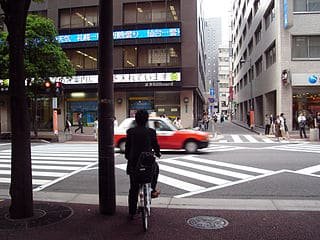
Most people dream to live in the city. They believe that residing in a highly urbanized place is better than a countryside. But that kind of living cannot suffice the life in a rural area. And there are lots of things that we can only find and experience in the city.
So, let’s find out the pros and cons of living in an urbanized area.
Table of Contents
Advantages of living in a city
Access can be considered the main advantage in an urban center. Although the parking cost is expensive, people ditch high gas and maintenance prices for traveling by public transit, foot, and bike.
The good thing is that large cities boast cutting-edge buses and high-end train systems. These ways of transportation run on a regular basis and provide affordable rates. This makes traveling more cost-effective and comfortable.
Cities are packed with green space, music venues, museums, theater, cultural attractions, and other forms of entertainment. These highly urbanized places have a variety of options for getting the most out of your free time. Others have free options, cultural programs, and rewards to enjoy every entertainment and attraction. Aside from big stores, skyscrapers, and office buildings, the culture and entertainment can be another reason to settle in a city.
Urban areas offer other experiences that are not available in small towns. From department stores, boutiques, to ethnic food stores, cities offer unique and memorable dining and shopping. When you’re lacking supplies, you can go to malls and commercial establishment easily.
For those who have a hectic schedule and are unable to cook the food themselves, don’t worry because there are a range of restaurants for you. What’s even more convenient is that you can order online. While working at home, the food of your option will be delivered straight to your doorstep. It will be fast, so the long hours of waiting will not be a problem. Plus, every deliveryman is nice, friendly, and professional.
In rural areas there is usually less equipment and services than in cities. Thus, for example, to carry out procedures, to pursue higher education or to obtain more specialized medical assistance, the rural population is forced to move to an urban center.
A city is expected to have thousands or even millions of people. Many of us believe that we can’t find peace and comfort in an urbanized place. However, it is always possible despite the number of people.
With the high percentage of population, it will be an advantage for you. It has unlimited social potential for networking and friends. While those with similar backgrounds separate into neighborhoods, cities also have a great diversity. Plus, the life in this place gives you the opportunity to broaden your professional contacts. It will also help you grow personal relationships.
The problem in a rural area is that it lacks innovative hospital equipment. When a sick person get admitted in a suburban healthcare center, they don’t receive the best service they deserve. Sometimes, attending physicians would recommend them to be transferred in an urban hospital, which is very stressful and inconvenient on their part.
In cities, low quality facilities are not a problem. Hospitals are equipped with the latest technology, a team of world class doctors, or excellent services. The only downside is that the bills are super expensive. But there are many types of medical insurance you should take advantage to cope up with costly medical care expenses.
Cities are vibrant centers of unique and special culture that provide opportunities to experience the local community. There is a ton of interesting options such as art galleries, theaters, clubs, concert venues, parks, clubs, restaurant, and a lot more. There is no shortage of fun activities that can match your interest. You will enjoy spending your time in these places without regrets.
The comfort of city life is another reason for you to live there. Everything is available for your convenience. Whether you need to go to work or buy home supplies, the transportation is hassle-free. It is also much simpler to enjoy nights out. You don’t have to stress yourself about missing the last bus.
An amazing perk of living in the city is the amount of education and career. Whether you want to earn a bachelor’s degree, post-baccalaureate education, or seek an employment opportunity, city gives you the chance to learn and develop. You can also participate in volunteer works.
The best educational institutions are concentrated in the cities and although this may vary in some places, the variety of schools in the city is a big plus and the reason why many of them move. From the most basic levels such as primary and secondary levels, you can notice a difference in educational levels.
One of the great advantages of the city is to be able to choose between several options, your school or the school for your children. The offer is wide: both public and private. Being able to choose, for example, between traditional schools and active schools. With a standard registration or with a minor registration, which ensures personalized attention.
Of course, in cities, not all are constructions to live and work. There are also spaces where you can entertain or distract yourself in your spare time. There are many green areas where you can practice sports, go for a walk and live together. As well as bars, restaurants, cinemas and museums, among many.
Disadvantages of living in the city
Since you already knew the pros of living in the city, let’s take a close look at the cons.
The main disadvantage of urban lifestyle necessitates the living in a fully crowded metropolitan. This extremely reduces your privacy because of little space and night activities. In rural settings, privacy is easy to have. In the city, the possibility is lessened.
Most buildings are close together. Living in flats is the most common option. This means that you are surrounded by many people, resulting in reduction of privacy.
It’s expected that an urban living brings a large number of people. This population has to be accommodated in living quarters, increasing the demand for a housing unit. With the high demand from the public, it leads to a drastic price increase. Every unit is rented out at a high price. Outright purchases are even costlier.
Despite the expenses you have to handle, it’s still exciting and fulfilling. The employment opportunities will give you enough sources of income. The good news is that there are other housing units you can afford. But it requires a lot of work, time, and effort. At the end of the day, you will find an option that suits your needs.
Typically, most urban settings do not have green spaces. The good news is that there are some but they are hard to find. People look for these spaces to do some physical activities such as walking and running which promotes good health. As an alternative, give parks and other open spaces a try. These provide you an opportunity to practice healthy living.
But nothing can beat a green space. After long and stressful months of work, consider to unwind and travel. Make sure to explore the most beautiful place to overcome your stress. Just plan ahead of time so that the successful escapade of your dreams will come to life.
The number one issue in urban centers are motorized transport and waste from people. Commonly these places don’t have enough green cover. As a result, there is high percentage of harmful gases in the atmosphere. Unlike rural lifestyle, urban centers have shortage in clean air, leading to serious diseases.
But you can take a break from these polluted places. Have a vacation on a suburban area for months. Even though it cannot beat the advancement of urban living, it’s fun and healthy. Witnessing majestic nature and other hidden gems will give you a memory you will always cherish.
Have you ever experienced living in the city for months? How was your experience? What did you realize about the people? Perhaps, you notice that urban settings are individualistic. Maybe, the sense of community is rare. Possibly, the majority of people are concentrated on their affairs. They do not pay attention to their neighbors and even friends.
It can be difficult to move from one place to another, as cities are characterized by high amounts of traffic. In addition to the time lost in a traffic jam, the physical wear is noted by the noise and emissions of the cars.
With so many inhabitants, some services may not be optimal for all citizens. In some colonies, they have problems due to lack of water and cuts, continuous light. Public transport does not always have the best conditions and those that operate it are not always the most suitable.
The advent of violence in depressed areas has increased due to unemployment in the vicinity of large cities.
These violent acts range from micro-trafficking and smuggling to human trafficking. This phenomenon happens with severity in Asia, Africa and Latin America.
At first, you may struggle living in a place without a sense of community. But as years pass by, you will be used to it. It’s a good training for you to become more independent and responsible. You will learn how to rely on yourself during a terrible situation.
So, what’s your thought? Whether you are planning to travel or settle in the city, prepare yourself. Let’s admit it. An urban lifestyle is difficult. You need to be strong and positive, especially when you’ll live on your own. When things get harder, go to shopping malls, dine in a restaurant, and explore the place to enjoy!
Top 10 Disadvantages of City Life | Pollution, Stress, Expenditure
Excitement to decide a big move to a big city can sometimes be distracting from the fact that you are going into a transition of the higher cost of living from a simple life in the countryside. City life is luring to most of the people, especially to those who live in a small villages and rural areas. Easy access to the social amenities, great infrastructure, and superb entertainment facilities are some of the causes behind this luring. The glamour of city life is the major reason for the high level of rural to urban migration. But it should be always kept in mind that the urban living is not for everyone. It is much more difficult than life in the suburbs and moves at a very fast pace. There are numerous cons and disadvantages of the living in a big city and city living.
UN has estimated that 55% of the world population lives in cities which are expected to rise by 68% at the end of the year 2050. Thus the cities are going to become more crowded and congested. Consider an example of any well know or major city like New York, London, Beijing, New Delhi, Seoul and you will be able to recall news which highlights the problem of these cities. The problems can be common such as high pollution level, traffic congestions, high cost of living, crime rates or exceptionally high real estate prices etc. Each city has it’s own set of benefits but disadvantages as well.
Disadvantages of City Life & Living in a Big City
In this section, we are going to see some of the major disadvantages of living in big cities. These can be grouped as economical, environmental, lifestyle, transportation & job related cons of city life.
Economical Disadvantages
Living in a city can be expensive, particularly in larger cities. Although the benefits offered are large, but so can be the cost of living.
Living Expenses: In the city, salaries are higher than in rural areas, but this come at a higher cost of living as well. The prices of the commodities are also higher due to the large concentration of people and huge demand.
High Rent & Expensive Real Estate: Need and willingness to live in urban areas has brought a large number of people to the city. Because of this, there is a huge demand for houses and residential areas. This in turn shoots up rent and the prices of the housing units due to shortage of serviced land in major cities. The outright purchase of the house is also very expensive in the city.
Opportunities for Jobs: Although there are huge numbers of job opportunities in the city, there are also several people who are competing for a single post. This can be frustrating during job searches. Especially when the economy of the city is low, you will remain unemployed even though there are thousands of job ads in the newspaper. The daily search, commute and rental expenses will further result in economical disadvantage.
Scarcity of space: Most of the apartments in big cities are generally tiny. Also, it is very unusual to have extra space outside your house or apartments like a lawn or a yard. Sharing a common wall with the neighbours and creative to utilize the space properly are the main traits for living a happy life in the city. Only in the parks, you will get to experience greeneries or can carry out physical activities for good health in the city. This is not the case in rural areas due to the abundance of greeneries and open space.
Health & Transportation Issues
Traffic: Traffic is the biggest nightmare in the city and especially in central business district/ central area. A large proportion of population prefer private transport instead of using public transport. Thus making it is impossible to avoid traffic in the urban areas. You always have to leave early from your home due to this headache.
Parking: Parking in the city can be a major problem compared to rural areas. Some areas in the urban setting have a paid permit for parking. Free ones fill up like a hot cake. You may have to park your car a few blocks away from the destination in the street.
Crime: In the city, the rate of crime is higher than in the countryside. People are more tempted to rob or do a theft due to increased poverty in urban areas.
Health: City living is generally equated to loss of physical activity. There is lack of green spaces and the overall urban lifestyle leaves individuals with little or no time to exercise. Those who are serious about keeping themselves healthy by means of exercise look out for gyms. However those living in small town might still find some open spaces and green spaces. Rural life offer more physical activity and thus eliminates need for gym in most of the cases.
Cultural Differences & Insensitivity
Lack of Privacy: Living in a crowded city is the basic necessity of the urban lifestyle. This precipitates the privacy reduction due to scarcity of space in the setting of the city. The closeness of the buildings, flats with a common wall and severely cramped apartments has lead to the decrease in space and diminution of privacy greatly.
Community: Most people in urban areas are very individualistic and pay little or no attention to the affairs of other people. The sense of community is very vital since many problems can be tackled as a community which is the case in the rural setting.
Different Types of People: The different types of people in the city can be a bit overwhelming sometimes if you are not properly familiarized with their culture. You will always be surrounded by the crowd, whether you want them or not.
Technology: Technologies are vastly and increasingly used in the progress and running of the city. As the inhabitants of the urban areas become more digitalised, there is an emergency to prevent any social division due to technological advancements.
Environmental Issues
Pollution: Big city life cannot be discussed without mentioning about pollution. Smog, high carbon emission rate, polluted drinking water and high decibels of noise are some of the reasons for air, water and noise pollution in the city. Also, the increased number of motorized transports and waste from the large population are other sources of pollution. Waste disposal and solid waste management are added disadvantage of a big city.
Noise Pollution: Many major metropolitan areas share one thing in common and that is noise pollution and levels. This is because the roads of the urban areas are full of cars, buses, taxis, and bikes which increases the overall noise level. Shopping centres are the hotspots of noise pollution. Another reason for noise pollution is the emission of sound from the large factories during their production. Noise pollution leads to different types of cardiovascular diseases, increase in blood pressure and stress.
Resources: Cities need more resources like food, water, and energy to be feasible. But the authorities of the metropolitan are reducing the water catchment areas, and lands for agriculture. Due to this many cities will struggle to offer these natural resources to the increasing demand of the population. Due to increasing growth in the population, green spaces will also be reduced due to liveability. Food prices may enhance due to scarcity of the freshwater and less number of fertile lands.
Other Disadvantages of Living a life in the City
Some facts about the disadvantages of city life in Various Countries
Some hard facts that showcase the disadvantageous position of the people living in different cities are:
Advantages of Living in the City
Well, to sum up, we can say that living in the city has some disadvantages but it does include some advantages also. You have to weigh the consequences of both the positive and negative aspects of urban life and make up your mind about moving to the metropolitan setting. It will be a perfect time to move to an urban area if you are young and are looking for a job or higher education.
32 Key Pros & Cons Of City Life Vs. Village Life
“I loved experiencing city life in New York.”
Quvenzhane Wallis, Actress
Pros and Cons of City Life vs. Living in the Countryside
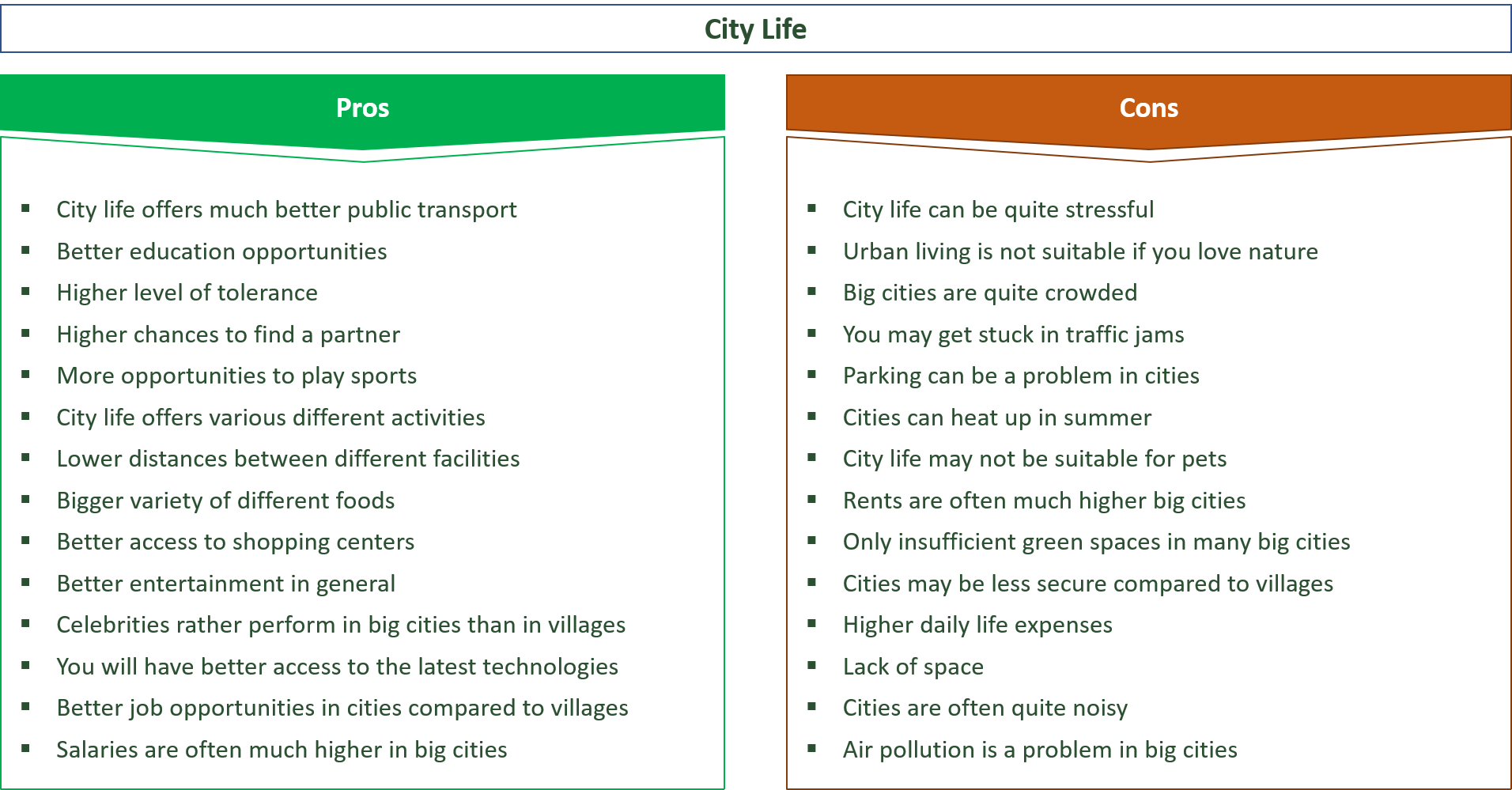
Many people love to live in the city. In fact, city life has many important advantages compared to living in a village.
However, there are also many issues related to living in a big city.
In this article, the pros and cons of city life are examined in detail.
Please enable JavaScript
Audio Lesson
Advantages of Living in the City vs. Living in the Countryside
City life offers much better public transport
One key advantage of city life is that you have access to much better public transportation.
Public transport can be a convenient way to get around and is also quite important to slow down global warming and to mitigate several other environmental problems.
Using public transport can also be much faster during rush hour compared to just using your car.
Hence, good public transport systems in big cities can greatly improve your overall quality of life.
Better education opportunities
Also the education opportunities are often much better in big cities compared to villages.
In fact, in many cities, you will have numerous options regarding preschool, elementary school and high school. Many big cities also have universities.
In contrast, there may be a great lack of education opportunities in rural areas.
Therefore, if you have kids and want to offer them the best education possible, city life also offers you many more options in this regard.
Higher level of tolerance
Since people of many different ethnicities live in big cities, there will also be a higher level of tolerance towards minorities in cities compared to smaller villages which often have quite traditional values and are not too eager to open up for different cultures.
Consequently, if you want to live in an area with many different cultural influences or even belong to a certain minority, city life may be better for you since people will be more open towards new cultures and your life will therefore be easier regarding many different aspects.
Higher chances to find a partner
Another benefit of city life is that it will be much easier for you to find a partner.
In big cities, you will have the opportunity to connect to many different people.
In turn, it becomes much more likely that you find a suitable partner.
Therefore, if you currently live in a village and have difficulties to find a suitable partner, chances are that you would have many more options if you lived in the city and you may consider moving to the city in order to increase your chances to find a partner.
More opportunities to play sports
In big cities, you will also have the opportunity to play numerous different sports.
In fact, there will be sports clubs for almost every sport you can imagine.
Hence, whatever sport you want to play, there will be someone who wants to play with you.
In contrast, if you live in the countryside, the selection of sports that are offered may be quite limited.
Therefore, if playing sports is really important to you, you might also be far better off with city life compared to living in a village.
City life offers various different activities
City life offers not only a much better selection of different sports, it also offers plenty of additional activities.
For instance, you can go out at night to various different locations.
Moreover, you can go to museums or do other cultural things. In general, in big cities, you will have a big variety of different activities and chances are that you will never get bored.
However, if you live in the countryside, there will not be too much to do and chances are that you will not be able to spend your leisure in the way you want to.
Therefore, also from an activity perspective, city life should be preferred over village life most of the time.
Lower distances between different facilities
In big cities, everything you need will not be too far away from you.
You will find the next store within walking distance.
You will find the next doctor’s office not too far away.
In general, everything you will need for your daily life will be concentrated in cities and there will not be too long distances to get from A to B.
In contrast, if you live in a small village, chances are that you will have to drive many miles until you find what you are looking for.
Moreover, some facilities may not even be present in villages.
For instance, if you have to attend a hospital, you may have to drive a long time to the next city.
Thus, city life can also be considered to be much more convenient compared to village life since you will be able to reach everything you need in a reasonable timeframe.
Bigger variety of different foods
Since there are many different cultural influences in cities, there will also be a much bigger variety of different foods in cities compared to the countryside.
Hence if you really like to try many different foods, you will be far better off by living in a big city.
Moreover, if you attend all those different restaurants, you can also get some inspiration about what to cook at home.
Therefore, also from a culinary perspective, city life definitely has an edge over village life.
Better access to shopping centers
Shopping is quite important to many people, especially to women.
If you live in a big city, it will be no problem to find suitable stores where you can go shopping all day long, at least if you have the money to do so.
However, if you live in the countryside, chances are that you will not have this opportunity since the number of shopping centers will be quite limited and you may also have to drive long distances to get to one of those centers.
Consequently, if shopping is quite important to you, living in a big city may be much better suited for you compared to living in the countryside.
Better entertainment in general
In big cities, you will also have much more entertainment opportunities compared to small villages.
You can go to many different bars and clubs, watch movies in cinemas or attend an escape room.
All this may not be available to you in small villages.
Hence, if entertainment is pretty important to you, city life will offer you much more of that compared to village life.
Celebrities rather perform in big cities than in villages
Another upside of city life is that you will be able to see more celebrities.
In fact, most big concerts and sports events will take place in big cities and if you want to see your favorite bands and sports stars live in person, chances are that city life will be the right way to go for you.
You will have better access to the latest technologies
If you live in a big city, you will also have much better access to latest technologies.
For example, while the internet connection is usually quite good in cities, it can be rather poor in rural areas.
However, a good internet connection is crucial for various parts of our daily life and if you don’t have such a connection, you may not develop sufficient technological knowledge, which may translate into significantly worse job opportunities in the long run.
Better job opportunities in cities compared to villages
In general, job opportunities in big cities are usually much better compared to villages.
This is due to the fact that many big corporations are located near the city center since they want to have access to as many qualified workers as possible in order to expand their business operations in a proper manner.
Therefore, if you aspire to a demanding corporate career, chances are that you want to go for city life since you will have many different companies from which you can choose from if you are highly-qualified.
Salaries are often much higher in big cities
Not only the job opportunities will be much better in cities, also the salaries are often much higher.
In turn, people in big cities will often be able to afford many more amenities compared to people living in the countryside.
Thus, if money is really important to you and you want to earn a high salary, chances are that you want to go for living in the city to maximize your income prospects.
You may not even need a car if you live in the city
Another advantage of living in the city is that you often do not even need a car.
Especially if you live close to the city center, you will have all the shops you need in your neighborhood.
Moreover, if you have to go for longer distances, you can still use public transport and reach your destination in no time.
Hence, if you are willing to make some compromises, you will not even need a car in many cases, which is not only beneficial for your pocket but also for our environment since you can improve your carbon footprint if you rely on public transport instead of using your car.
Easier to meet new people in the city
If you currently do not have too many social connections or friends, chances are that the city life will also benefit you in this regard.
Since there are so many different bars you can do to, you will soon be able to make new friends.
Moreover, you could also join a sports team and make new connections there.
In general, it will be much easier for you to make new social connections in big cities compared to a state where you live in a small village.
Better medical infrastructure in the city
If you live in a big city, you will also have much better access to medical facilities.
For example, imagine you suffer from a quite rare disease and you need proper treatment for it.
Chances are much higher that you will find a specialist in this field in a big city compared to small villages.
Hence, also from a medical perspective, it can make great sense to decide for city life and against living in the countryside.
Disadvantages of Urban Living vs. Village Life
City life can be quite stressful
While there are many important advantages to living in the city, there are still some problems related to it.
For instance, one downside of city life is that it can be quite stressful.
Many people feel quite overwhelmed by all the noise, by the crowds of people populating the inner city and so on.
In general, living in a city feels much more stressful compared to living in the countryside and stress is never good for our overall health.
Hence, if you feel quite stressed if you have too much going on around you in the city, you may rather prefer to go for countryside living instead.
Urban living is not suitable if you love nature
Also if you are a person who really loves nature, you will likely be better off by living in rural areas in the countryside instead of living in big cities.
In the countryside, you can live close to nature and you will also be able to go to the nearby forest or other nature reserves almost every day.
However, if you live in a big city and there are no nature reserves within the next hundred miles, you will not be able to go for a walk in nature after work at all.
Hence, if you want to be surrounded by nature, chances are that you will be better off by living in villages instead of living in the city.
Big cities are quite crowded
Since there are so many people living close to each other, big cities are often also quite crowded.
Making things worse, many people also commute to work from the countryside to the city every day, which even increases the number of people that will be present in the city.
Therefore, if you hate crowded places and need more space for yourself, chances are that you will also be much better off with village life.
You may get stuck in traffic jams
In big cities, traffic jams are quite normal and if you have to commute through the city, chances are that you will also lose plenty of time every morning and evening in traffic.
In contrast, if you live in the countryside, there will almost be no traffic jams at all and you can use your time much more efficiently due to that.
Cities can heat up in summer
Another problem of living in the city is that cities heat up quite a lot in summer.
In fact, due to the many glass office buildings in inner cities which are closely located to each other, the air inside those inner cities will heat up in an unpleasant manner.
In turn, you will also sweat a lot, especially if your workplace has no air conditioning.
In contrast, if you live in a small village, you may not be affected by heat too much since there will be more space between buildings and the air will not heat up as much due to that.
City life may not be suitable for pets
Also if you have a pet, city life may not be for you.
On the one hand, you will have a much harder time to rent a flat or a house since many landlords do not accept pets in their property in cities.
On the other hand, your pet will also not have too much space in big cities since properties are much smaller on average. In turn, your pet may be kept under unnatural conditions.
Thus, if you have a pet, village life may also be much more suitable for you.
Rents are often much higher big cities
Another disadvantage of living in the city is that rents are often also much higher compared to living in the village.
Many people want to live in cities and while the demand for housing in the city increased quite a lot over the past decade, housing offers are rather limited.
In turn, with increasing demand and low supply, property prices and rents increased substantially.
Hence, if you want to save significant amounts of money on rent, you may want to choose the village life over living in the city.
Only insufficient green spaces in many big cities
In many cities, there will also only be insufficient green spaces.
Hence, if you love nature and want to spend your time in a natural environment, city life may not be the way to go for you.
Cities may be less secure compared to villages
Another benefit of living in a village instead of living in the city is that cities are also less secure on average.
Thus, if you want to live as safe as possible and want to minimize the risk to get robbed, chances are that you will be better off by living in villages also in this regard.
Higher daily life expenses
Also the overall price level is higher in big cities. You will have to spend more money on food, drinks and various other activities of daily life.
Hence, if you want to save money on all those things, village life will be better suited for you.
Lack of space
If you live in a big city, you will likely also suffer from a lack of space.
Cities are often quite crowded and you will often be surrounded by a high number of people.
Moreover, chances are that rents will be quite high and that you will also not be able to afford big homes.
Therefore, if having a big property and space in general is quite important to you, you may be far better off by living in the countryside.
Cities are often quite noisy
Since there are so many people and cars around, big cities are also quite noisy.
Hence, if you are a person who wants to spend his or her time in a quiet atmosphere, city life will not be suited for you at all.
Air pollution is a problem in big cities
In big cities, the air quality is usually also quite bad.
This is not only quite unpleasant, it can also lead to serious health issues.
Consequently, if you want to spend your time in an area with good air quality, the city life may not be for you.
People may lose connection to nature
In general, many people who live in big cities also lost their connection to nature.
This is quite sad since we as humans originally lived in natural environments for quite a long time and breaking with nature means breaking with our identity.
Hence, in order to maintain a better connection with nature, living in villages instead of big cities may also make sense in this regard.
Top 10 City Life Pros & Cons – Summary List
| City Life Pros | City Life Cons |
|---|---|
| City life gives you better job opportunities | City life can be stressful |
| Higher wages in big cities | May not be suitable if you love nature |
| Better overall infrastructure | You may get stuck in traffic jams |
| Better education opportunities in cities | Crowded inner cities |
| Higher medical standards | Heat may concentrate in big cities |
| Easier to find a partner in cities | Parking can be a problem in big cities |
| Higher level of tolerance | Higher rent in cities |
| Better overall entertainment in cities | May not be suitable if you own a pet |
| You may not even need a car | Air pollution in cities |
| Better access to latest technologies | City life implies noise pollution |
Should You Live In A City Or In A Village?
From the previous discussion, it had become clear that there are various advantages and disadvantages of living in the city.
In the end, you have to decide for yourself whether the city life is for you or if you rather want to live in a smaller village instead.
Sources
About the author
My name is Andreas and my mission is to educate people of all ages about our environmental problems and how everyone can make a contribution to mitigate these issues.
As I went to university and got my Master’s degree in Economics, I did plenty of research in the field of Development Economics.
After finishing university, I traveled around the world. From this time on, I wanted to make a contribution to ensure a livable future for the next generations in every part of our beautiful planet.
Wanna make a contribution to save our environment? Share it!
10 Advantages and Disadvantages of Living in the City
The cities are the oldest form of urbanization, with more than 10 thousand years of antiquity. They carry out economic, administrative and political activities that influence the localities nearby.

They need infrastructures such as roads, educational centers, health, aqueducts and transport that allow the activities of residents and foreigners.
They can be defined from a determined number of inhabitants and the square kilometers where they reside.
For example, Australia defines cities from 1,000 inhabitants. Its borders are defined by municipal development legislation, which is appropriate for each country, which also establishes the powers of municipalities and parliaments.
Municipalities are responsible for overseeing public service activities such as regulating traffic, providing primary health care, supervising cleaning contractors, education at pre-school and primary levels, as well as citizen security coordinated with Regional and national authorities.
The municipal parliaments are responsible for overseeing, controlling and legislating the management of municipalities. A city where several municipalities can form a metropolitan area, allowing easy access to the main public services of education, health, recreation areas and the development of manufacturing and commercial activities.
The 10 advantages and disadvantages of the most important cities
To enumerate the benefits and disadvantages of residing in a city, we will focus mainly on those that belong to the European Union.
5 benefits of residing in a city
1- Public transport
In the European Union (EU), more priority is given to the use of public transport, which reduces noise and air pollution by the carbon dioxide emissions produced by the use of the private vehicle.
The closeness between the sleeping cities and the central areas make this important advance possible. Bicycles are also encouraged to be used on bicycle lanes.
2- Recycling
The EU is educating, promoting and implementing the recycling Through the classification of waste into fully identified waste containers in public places.
3- Conservation of green spaces
The conservation of green spaces in the cities is an EU goal, it seeks to carry out projects for the reduction of urban expansion, paving and the loss of natural habitats.
Green spaces need to be managed in a strategy that implies urban competition policy requirements.
4- Promotion of the sowing of green areas in roofs in buildings
The aim is to create new botanical gardens in EU cities. These projects are sponsored by municipalities and environmental organizations.
5- Access to public services of education, health and culture
Educational, health and cultural facilities allow citizens of the EU to be satisfied with them, demanding continuous improvements.
This is due to the combination of public policies of the States to make citizenship of these services easier to access, from which human beings strengthen their values And principles of a diverse society, open and in search of more justice.
5 disadvantages of living in the city
1- Violence
The advent of violence in depressed areas has increased because of unemployment around large cities.
These violent acts range from micro-trafficking and smuggling to trafficking in persons. This phenomenon happens with severity in Asia, Africa and Latin America.
2- Collapse of public services
Large health centers in EU cities may suffer from truncation or collapse when providing services to patients due to the saturation of these by citizens, who instead of going to primary health centers, Hospitals.
3- Lack of essential public services
The lack of essential public services such as water, electricity, health and education can be caused by the disorderly growth of large cities in developing countries. Municipalities and national governments should coordinate measures to reduce this situation.
4- Lack of spaces for people with functional diversity
In developing countries, cities lack spaces for people with functional diversity.
There are more inclusive initiatives in cities such as Mexico City and Santiago de Chile occupied in this area.
5- Shortage of real estate offer
The shortage of real estate for rental and sale in cities is a social problem in developing countries, since there are cases of coexistence of 1 to 3 generations of the same family.
Land ownership should be encouraged and a housing rental market should be active. In Venezuela the housing deficit exceeds two million five hundred thousand homes.
Governments of developing countries must promote public policies to solve the problems of urbanism existing in capital and main cities.
They should also promote the development of rural areas for productive and residential use with the feasibility of offering public services and driving harmonious growth in their cities and remote areas.
Organizations for the development of cities
There are organizations dedicated to studying development parameters and problems in cities, such as:
Источники информации:
- http://www.lorecentral.org/2018/08/advantages-and-disadvantages-of-living-in-the-city.html
- http://planningtank.com/city-insight/disadvantages-living-city-life
- http://environmental-conscience.com/city-life-vs-village-life-pros-cons/
- http://www.lifepersona.com/10-advantages-and-disadvantages-of-living-in-the-city