What to you want to be when you grow up
What to you want to be when you grow up
What Do You Want to Be When You Grow Up?
Steps to Decide on the Right Job or Career
:max_bytes(150000):strip_icc()/ADHeadshot-Cropped-b80e40469d5b4852a68f94ad69d6e8bd.jpg "What to you want to be when you grow up. Смотреть фото What to you want to be when you grow up. Смотреть картинку What to you want to be when you grow up. Картинка про What to you want to be when you grow up. Фото What to you want to be when you grow up")
:strip_icc()/what-do-you-want-to-be-when-you-grow-up-2059788-final-fce5b87175dd4ee2a2d1f101fb3f4b06.png "What to you want to be when you grow up. Смотреть фото What to you want to be when you grow up. Смотреть картинку What to you want to be when you grow up. Картинка про What to you want to be when you grow up. Фото What to you want to be when you grow up")
Derek Abella / The Balance
«What do you want to be when you grow up?» is a question you will likely hear a lot as you’re growing up. If you’re not sure, review these tips and advice on how to consider career options and decide on what could be the best career path for you.
Doing so can help inspire you. And don’t be concerned if you don’t have a definitive answer to this question. After all, grownups change jobs and careers quite frequently.
Choosing a Career
Choosing a job or career is one of the most important decisions of your life. If you’re like numerous young people, you don’t know the answer to the big “What do you want to be when you grow up?” question, and you’re stressed about it. That’s even more likely to be the case if everyone you know is asking you what you want to do.
Maybe you have a few ideas about what path you’d like to pursue, but you don’t know whether these ideas are realistic or not.
Maybe you’re asking yourself questions such as:
Deciding on a career isn’t easy. If you haven’t figured it out yet, you’re not alone.
Many freshmen enter college undecided on their major. And 30% of college students change their major within three years of enrollment, according to research from the U.S. Department of Education. Being undecided or changing your mind is normal.
Determine Whether Your Dream Can Be a Career
If you’re lucky enough to have a passionate interest, it’s a good place to start exploring the options for what you could do. Maybe you love to sing, but you know that your chances of making it as a singer are slim because there’s so much competition. What about other jobs with which you could take advantage of your musical talents? Maybe you could become a music teacher or perhaps a sound engineer.
If you love to perform, you are probably an outgoing person who enjoys being with people. These qualities are essential for most sales jobs. Cool jobs might be hard to get, but some people are lucky enough to get them. Maybe it can be you?
How to Get Started
Keep in mind that skills pay the bills. You don’t need a Ph.D. to get a good job, but most of the “best jobs” in the fastest-growing fields require specialized training, beyond what you’ll get in high school. Here’s how you can start the process:
Try Out Some Career Options
You can also learn more by testing out career options. Does your high school or college have a job shadowing program? You may be able to spend time with professionals who work at the jobs you’re interested in to get the scoop on what they are like.
Spending a few hours or a day on the job is a great way to get inside information. Volunteering or doing an internship are other ways you can learn more about a role before you decide to pursue it. The more information you have, the easier it will be to make a decision.
Stay Flexible and Open to New Ideas
Over time, you’ll discover that some doors close, but others open. For example, say you had thought you wanted to become a doctor but you had got a B-minus in organic chemistry. With that B-minus, you may not be able to get into medical school, but there are hundreds of health-related jobs that don’t require organic chemistry or won’t hold that grade against you. Some of these jobs are just as fulfilling as being a doctor, pay well, and leave more time for a personal life.
People change over time, and so does the job market. Your grandparents would never have planned for a job in computing because there weren’t any. Now millions of people have jobs in the computer industry, whether they work for an internet company, write code, or sell products in the Apple store.
You can’t plan for jobs that don’t yet exist, but you can bet that most jobs in new industries will require that you know some computer skills and can write a typo-free note or email. The more skilled you are at the basics (reading, writing, arithmetic, etc.), the better your chances at thriving in whatever new roles come along.
The Journey of a Thousand Miles
There’s a famous Chinese saying: “The journey of a thousand miles begins with a single step.” If you follow all these recommendations, you still might not have found the answer to the question of what you want to be when you grow up, but you will have started the journey.
And if someone asks you what you want to be, you can answer the question truthfully: “I’m exploring my options.»
When I Grow Up

What do you want to be when you grow up? Maybe a firefighter? Or an astronaut? Or maybe a dancer? Practice talking about jobs and careers with this super simple and super fun song, “When I Grow Up”.
Flashcards (1)
When I Grow Up Flashcards
Worksheets (1)
When I Grow Up – Draw & Write
Song Lyrics
When I grow up,
when I grow up,
when I grow up,
I want to be a firefighter.
When you grow up
what do you want to be?
When you grow up
what do you want to be?
When I grow up,
when I grow up,
when I grow up,
I want to be a baker.
When you grow up
what do you want to be?
When you grow up
what do you want to be?
When I grow up,
when I grow up,
when I grow up,
I want to be an astronaut.
When you grow up
what do you want to be?
When you grow up
what do you want to be?
When I grow up,
when I grow up,
when I grow up,
I want to be a dancer.
When you grow up
what do you want to be?
When you grow up
what do you want to be?
When I grow up,
when I grow up,
when I grow up,
I want to be a firefighter.
When you grow up
what do you want to be?
When you grow up
what do you want to be?
When I grow up,
when I grow up,
when I grow up,
I want to be a baker.
When you grow up
what do you want to be?
When you grow up
what do you want to be?
When I grow up,
when I grow up,
when I grow up,
I want to be an astronaut.
When you grow up
what do you want to be?
When you grow up
what do you want to be?
When I grow up,
when I grow up,
when I grow up,
I want to be a dancer.
What Do You Want to Be When You Grow Up?

It’s a question we all got when we were children.
My own answers to that question were all over the place and would change pretty frequently.
In trying to remember what my answers were, I’m sure I probably said any of the following on any given day: a teacher, an author, a businesswoman, an artist, etc.
But the only one I distinctly remember being the most sure about was a fashion designer. That was after my grandmother gave me some Fashion Plates for Christmas one year.

I loved my fashion plates and enjoyed the creativity of them. They made me want to learn how to really sketch clothing designs by hand.
Ask yourself:
What did you want to be when you grew up? What do you still want to be?
So when I got to high school I decided to take art all four years to learn how to sketch.
That is until I got into my first year of art where I ditched the idea of becoming a fashion designer (or an artist) after my art teacher made my life a living a hell.
She was such a rigid woman, too rigid to be teaching anything that’s supposed to be creative. Her teaching methods and personality made me never want to take another art class again.
Ask yourself:
Has there ever been a person or an experience in your life that was so negative it turned you off from what you wanted to be when you grew up? How did that affect you?
So next I looked to the subject I was enjoying the most at the time…beginner-level Spanish. I really loved it and thought I’d like to eventually major in foreign languages once I got to college.
But then came Spanish II, which was really difficult for me, much more than Spanish 1 where I was making all A’s.
Ask yourself:
Have you ever lacked the skill or ability to be the thing you wanted to be when you grew up? How did you shift your focus?
Finally, I discovered psychology…which changed everything for me.
I found psychology so interesting, and my understanding of it came naturally to me. It was becoming my passion.
Ask yourself:
What comes naturally to you? What are you passionate about?
But when I announced to my family I was going to study psychology as my college major, they weren’t as enthusiastic about it as I was.
“Oh, how in the world are you going to make any money with THAT kind of degree?”
My dad said I should major in business (his passion)…because I’d make more money.
My mother said I should be a nurse…because I’d make more money.
Even my brother chimed in and said I should be an accountant because, again,… I’d make more money.
Ask yourself:
Did anyone ever try to discourage you from becoming what you wanted to grow up to be? How did you respond?
So why didn’t I listen to any of my family members? Several reasons:
Don’t get me wrong, I understand why choosing a career path that paid well over choosing one I loved was important to my parents.
They were both born in the late 1930s, still early enough to have felt some of the long-term effects of the Great Depression.
Their parents drilled into them the importance of being financially secure in the event of another depression, so they were just doing what they thought was best for me by trying to encourage me into fields considered more lucrative.
My brother is a lot older than me. In fact, he’s closer in age to my dad’s generation than he is to mine. Therefore, his mentality has also been “get a job that pays well regardless of whether you like it,” (and BTW, he’s miserable in his safe, secure job).
Ask yourself:
Is there something you’re passionate about even though it may not make you a lot of money? Which is more important to you?
I stood firm in my decision to major in psychology (and minor in sociology), did well in all my psychology classes, and made the dean’s list several times.
It wasn’t until the summer between my junior and senior year that I knew what I wanted to do with my degree.
That summer I had been an orientation leader at my alma mater and had also been working the previous two years in the Provost’s office as a student worker.
I loved the college atmosphere, loved working with incoming students, and had developed a strong understanding of the organizational structure of a university.
I decided to ask my Dean of Students how do I get a job like his? (This was my first time conducing an informational interview and had no idea at the time that was what it was called.)
He explained I would need a master’s degree in a field I had no previous idea existed. I started researching graduate programs in higher education administration and student personnel services.
Ask yourself:
Have you explored a career path that was previously unknown to you? What is it? What have you learned about it? What else do you want to learn about it?
The more I found out, the more I realized my psychology degree was the best foundation for what I would study in graduate school.
In fact, much of what I learned in grad school was just an extension from undergrad.
Unlike my fellow grad students who came from other majors like finance and business, I already had familiarity with a lot of the theories and material.
Once I had decided on higher education as a career path, I still had to narrow down what area of higher ed I wanted to go into.
My degree was readying me for so many possibilities.
I could go into financial aid, housing/residential living, Greek life, admissions, orientation, career services, academic advising, first-year programs, student activities, study abroad, international student services, and on and on.
Ask yourself:
Do you sometimes have so many career options or career interests you find it hard to narrow down your choices?
I narrowed my choices down into three areas based on the ones that interested me most: orientation programs, freshman year experience programs, and career services.
I delved into those three areas by gaining practical experience through internships, volunteer work and special projects while finishing my degree.
It was while volunteering in the university’s career center I knew I wanted to help students figure out what they wanted to be “when they grew up” based on their own interests and passions instead of their parents’ wishes.
Ask yourself:
Has a previous personal experience inspired you to a career helping others facing the same experience?
After earning my masters, I went on to be a college career adviser at various universities and even held the title of director of career services at one time.
I also got to teach some college level courses.
I loved what I did.
My job even allowed me to use my creative side in developing career-related programs for my students.
But when my creativity began to be stifled, I decided to make a bit of a career change and started my own image consulting business (click here to read the story on how that happened).
What do you want to be when you grow up?
Growing up, there was one particular question I hated hearing:
“What do you want to be when you grow up?”
My answers never failed to change and varied from becoming a Pokemon Master to a developer at Riot Games.
Fast-forward to the present day. I am now 22-years old and at the start of a quarter-life crisis. I have changed my degree 3 times so far and the question has now evolved to a now repetitive interview question: “Where do you see yourself in the next 5 years?”
Although I still don’t know the answer to the question nor do I know what I specifically want to do, I’ve learned a lot about myself and the future I want to craft. My experiences throughout university have led me to discover my interests and passions. I hope these words of advice help shape your career decisions.

I like to define mentorship as the opportunity to develop someone to be the best version of themselves, and I’ve had the privilege of being on both the giving and receiving ends of mentorship.
There are many reasons why you should find a mentor. Whether it’s to take a second opinion or be directed to the right answers, it has definitely left a captivating impact on my life, inspiring me to create this post. We’re already being mentored without our knowledge, as mentorship can come in various forms: shared advice from friends, listening to your favourite HSC tutor’s past experiences, and even supervising your annoying sibling.
It’s quite obvious that mentees always get the opportunity to foster those lessons and nurture them into personal growth, especially when it comes to building self-awareness and emotional intelligence. But what’s in it for mentors? Is it just the satisfaction of helping others?
Well to me… it’s more than that.
Despite having another year of university, I still choose to help others as much as I can. I’ve been through a lot of ups and downs over my university life, and at times, a mutual mentor-mentee relationship can be therapeutic. Being a mentor can be full of surprises and there have been many times where I’ve learned from my mentees due to their unique perspectives to life’s biggest questions. Sometimes just sharing stories with similar narratives to my current issues teaches you ways you should tackle the challenge.
My first experience of becoming a mentor was a game-changer. It taught me how to foster long-term relationships through listening and earning their trust. It also provided me with the motivation to consistently strive for my personal best. This came in the form of tutoring my first student. Our sessions evolved from providing 1.5hrs of Mathematics assistance into an additional hour of providing tips and tricks to ensure he didn’t fall in the same pit of ‘burnout hell’. Being able to witness his work ethic and turn my advice into success was captivating. His transformation from a curious student to taking initiatives at a growing startup that collects every startup award like taking candy from a baby is an encouraging sign to see.
This one experience was simply transformative and gave additional motivation to strive for my best.
2. Don’t just be reactive. Be proactive and take every opportunity.

The biggest transformation comes from the least expected experiences. My transition into my sophomore year was awkward. By this time, I’ve had changed degrees 2 times and everyone in my cohort was settled in their friend circle. After the repetitive and mundane lifestyle where I’d only reacted to upcoming assessments I had in my freshman year, I wanted to immerse myself in the university culture but I struggled to do so. I had no experience and the layer of introversion made it difficult for me to shine in society interviews. It was damaging to read rejection after rejection in my email inbox.
However, I was fortunate to be given an extremely enriching opportunity when my passion for STEM led me to join the Marketing team in the UNSW Mathematics Society. A big part of my growth and development was Rob. He gave me the creative freedom to experiment with content and ultimately elevated my confidence. He was always there to listen and was open to any suggestions. My awareness to pick up on immediate trends/memes and incorporate it with the popularity of our lecturers was a winning formula (no pun intended). This ultimately skyrocketed and engagement and shifted us to becoming one of the top university societies within 6 months.
To this day, I still receive interview questions asking about how I was able to achieve that feat which just left me smiling. The experience made me realise I had a passion for creating content, strategising and understanding analytics. I’m grateful for this opportunity and thank myself for not giving up when the going got tough.
My favourite university experience came as a result of being proactive. It’s a memory I’ll forever cherish. The journey made me realise I enjoyed teaching and building relationships with others. Going on a week-long journey across the state to educate school children about the impact of Engineering was motivating. When I experienced School Outreach from multiple organisations as a student, I didn’t think much of it. But there was one quiet kindergarten student who made me realise my potential impact.
When we were about to move to the next school, the quiet kid approached me and gifted me with a native plant from Muswellbrook (252km away from Sydney). She told me she wanted to be an Engineer so she could help everyone. This left me with a smile and it just happy that I was able to get through to at least one person.
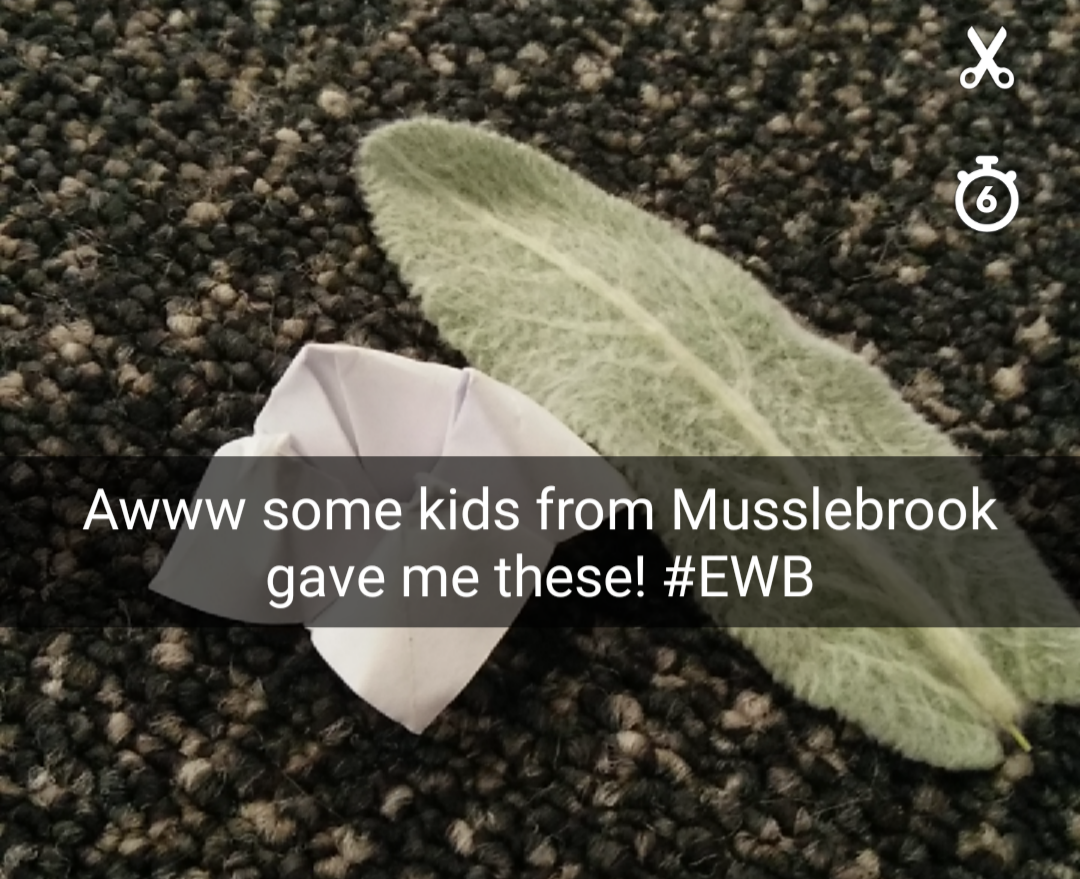
If there’s one thing that these 2 experiences have taught me, it’s that you don’t know what you’ll like until you try it. I hope my future career encourages this notion and supports colleagues to take the initiative.
3. Pursue something challenging yet rewarding.

Early on in my degree, I struggled to identify my passions and interests because of this particular mindset: Success-fueled passion — the enjoyment of an area due to achieving results. It’s a classic ‘What came first, the chicken (Success) or egg (passion)’ situation. In one exam, I’d be amazing in the subject, and then the next moment, I’d do horrendously in another. It’s the reason why I’d put in a lot more effort in the subjects I did well in, but ultimately ignored the other subject where the outcome would result in disappointment.
However, studying for the ‘easy’ content eventually turned to boredom, where I’d lead myself to question ‘why is this important’. It wasn’t challenging myself and it made me feel stagnant. It’s as if I was only studying for the content only to achieve ‘good marks’ and not because I had a genuine interest in it. It no longer sparked my curiosity to ask questions and thus my priorities shifted.
It was until my penultimate year to realise the area of Engineering I wanted to pursue. The opportunity to revisit Sustainability and the medical field reminded me of the reasons why I pursued engineering in the first place. The chance to innovate and create something new that could leave an everlasting impact on someone’s life is an experience I don’t want to miss out on. This came in the form of a design course where my team created a medical device to enable a client with cerebral palsy to drink without any assistance. The project was thought-provoking and it encouraged me to analyse my surroundings for inspiration. Although my team members encountered many hurdles in the design process, the satisfying feeling of a functional product made it worthwhile.
If 17-year-old Justin was asked what he will achieve by the age of 22, he wouldn’t be able to predict this amount of growth and success. The development over the past 4 years has been unexpected and has been accredited to my curiosity and desire to give everything a go. Although new experiences may be daunting, life is a long journey of self-discovery. Even if the experiences don’t turn out as you had hoped, just remember that feeling of regret and resentment is only temporary. To those who are about to embark on their adulthood, don’t worry about the emotional strain of new challenges and focus on the feeling of euphoria once you complete them.
Презентация по английскому языку на тему «What do you want to be when you grow up?» (3 класс), 2021


Курс повышения квалификации
Основы общей и педагогической психологии в деятельности педагога образовательного учреждения
Курс повышения квалификации
Дистанционное обучение как современный формат преподавания
Курс повышения квалификации
Геймификация как универсальная технология развития внутренней учебной мотивации школьников
«Учись, играя: эффективное обучение иностранным языкам дошкольников»

Учебные задания в аспекте функциональной грамотности школьников в новом учебном году
Открытая сессия для педагогов и родителей
Описание презентации по отдельным слайдам:

What do you want to be when you grow up?
Talking about jobs and careers
What do you want to be when you grow up?
When I grow up,
when I grow up,
when I grow up,
I want to be a doctor.
What do you want to be when you grow up?
When I grow up,
when I grow up,
when I grow up,
I want to be a firefighter.
What do you want to be when you grow up?
When I grow up,
when I grow up,
when I grow up,
I want to be a driver.
What do you want to be when you grow up?
When I grow up,
when I grow up,
when I grow up,
I want to be a baker.
What do you want to be when you grow up?
When I grow up,
when I grow up,
when I grow up,
I want to be an astronaut.
What do you want to be when you grow up?
When I grow up,
when I grow up,
when I grow up,
I want to be a dancer.
What do you want to be when you grow up?
When I grow up,
when I grow up,
when I grow up,
I want to be a dancer.
What do you want to be when you grow up?
When I grow up,
when I grow up,
when I grow up,
I want to be a teacher.
What do you want to be when you grow up?
When I grow up,
when I grow up,
when I grow up,
I want to be a nurse.
Рабочие листы и материалы для учителей и воспитателей
Более 3 000 дидактических материалов для школьного и домашнего обучения
«Кинетический имидж учителя и его невербальное влияние на учеников»
Свидетельство и скидка на обучение каждому участнику
«Начало учебного года современного учителя»
Свидетельство и скидка на обучение каждому участнику
Дистанционные курсы для педагогов
311 лекций для учителей,
воспитателей и психологов
Получите свидетельство
о просмотре прямо сейчас!
Найдите материал к любому уроку, указав свой предмет (категорию), класс, учебник и тему:
5 896 274 материала в базе
Материал подходит для УМК

«Английский язык (в 2 частях)», Афанасьева О.В., Михеева И.В.
Unit 6. What’s Your Job?
«Нейроигры для детей от 1 до 7»
Свидетельство и скидка на обучение каждому участнику
Другие материалы

Вам будут интересны эти курсы:
Оставьте свой комментарий
Авторизуйтесь, чтобы задавать вопросы.
Настоящий материал опубликован пользователем Каручева Марина Магомедовна. Инфоурок является информационным посредником и предоставляет пользователям возможность размещать на сайте методические материалы. Всю ответственность за опубликованные материалы, содержащиеся в них сведения, а также за соблюдение авторских прав несут пользователи, загрузившие материал на сайт
Если Вы считаете, что материал нарушает авторские права либо по каким-то другим причинам должен быть удален с сайта, Вы можете оставить жалобу на материал.
Автор материала

Московский институт профессиональной
переподготовки и повышения
квалификации педагогов
Дистанционные курсы
для педагогов
663 курса от 690 рублей
Выбрать курс со скидкой
Выдаём документы
установленного образца!
«Организация профессиональной деятельности социального педагога в условиях реализации ФГОС»
«Как закрыть гештальт: практики и упражнения»
«Основы работы с Microsoft Word»
Подарочные сертификаты
Ответственность за разрешение любых спорных моментов, касающихся самих материалов и их содержания, берут на себя пользователи, разместившие материал на сайте. Однако администрация сайта готова оказать всяческую поддержку в решении любых вопросов, связанных с работой и содержанием сайта. Если Вы заметили, что на данном сайте незаконно используются материалы, сообщите об этом администрации сайта через форму обратной связи.
Все материалы, размещенные на сайте, созданы авторами сайта либо размещены пользователями сайта и представлены на сайте исключительно для ознакомления. Авторские права на материалы принадлежат их законным авторам. Частичное или полное копирование материалов сайта без письменного разрешения администрации сайта запрещено! Мнение администрации может не совпадать с точкой зрения авторов.
Источники информации:
- http://supersimple.com/song/when-i-grow-up/
- http://medium.com/swlh/what-do-you-want-to-be-when-you-grow-up-c42731fcccfb
- http://medium.com/purposely/what-do-you-want-to-be-when-you-grow-up-dfc67c7b32ca
- http://infourok.ru/prezentaciya-po-anglijskomu-yazyku-na-temu-what-do-you-want-to-be-when-you-grow-up-3-klass-2021-5239456.html